
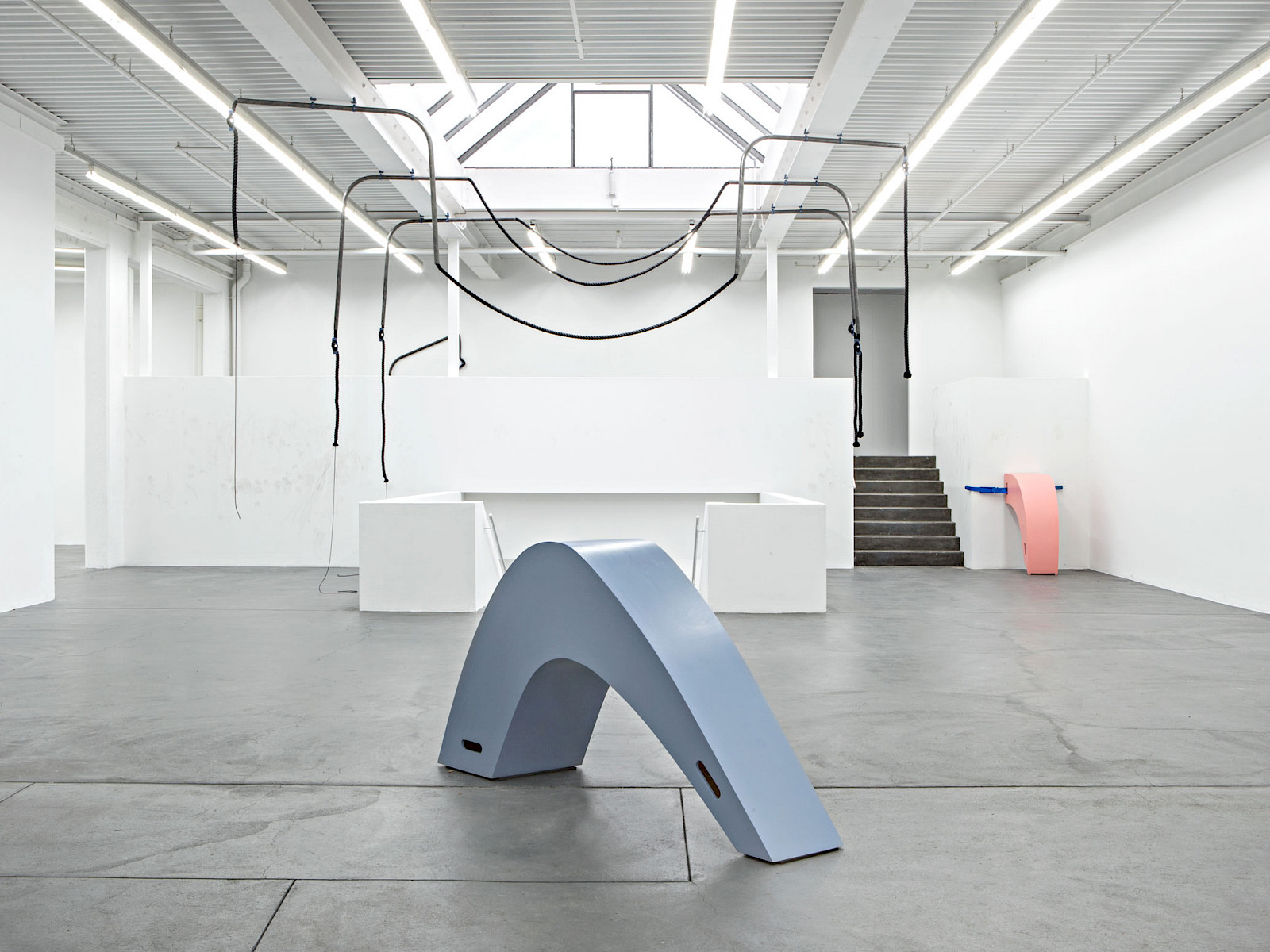
Installation view "Traceur / Traceuse" curated by Ines Goldbach at Kunsthaus Baselland, Muttenz / Basel, 2014
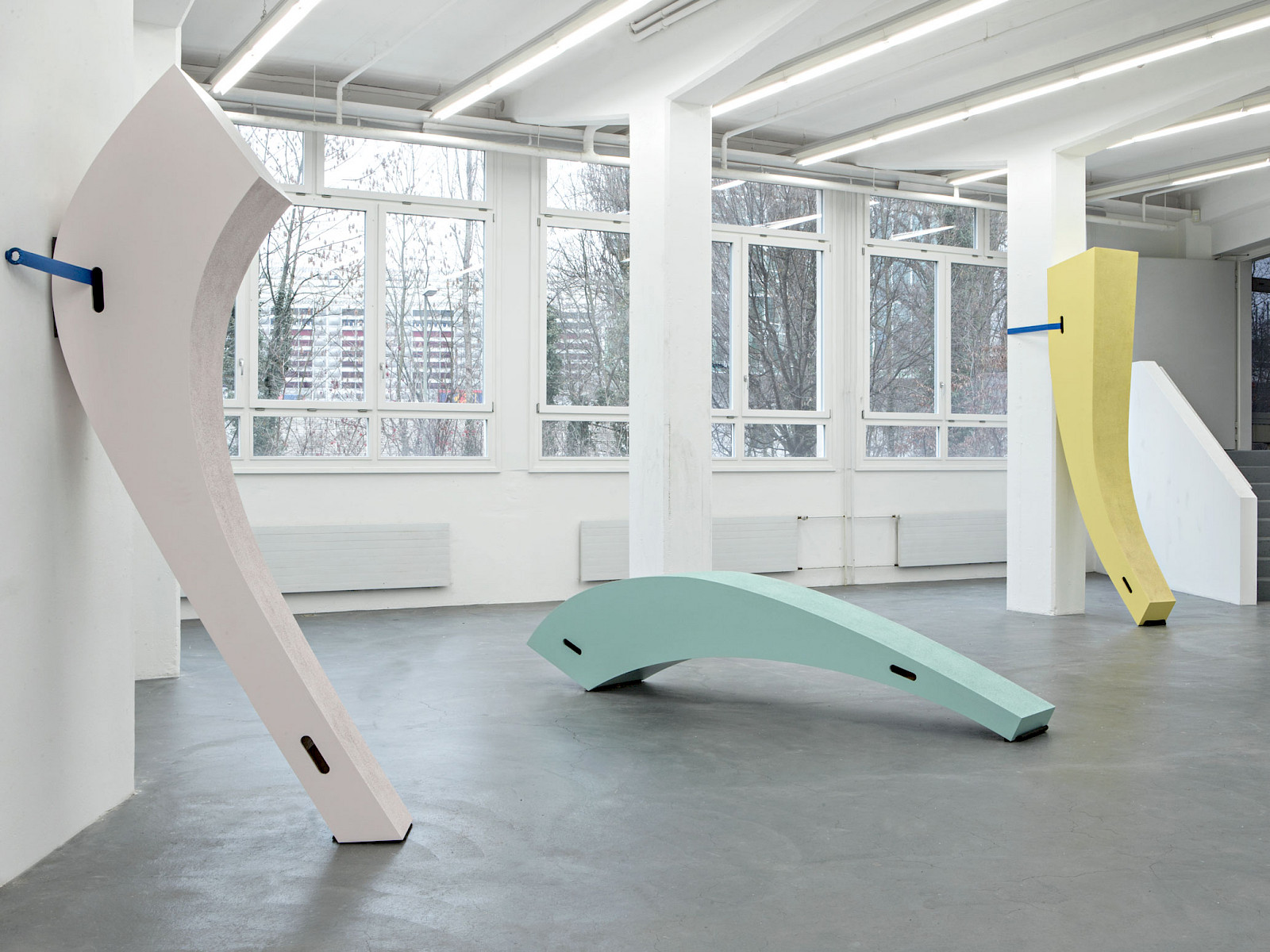
Installation view "Traceur / Traceuse" curated by Ines Goldbach at Kunsthaus Baselland, Muttenz / Basel, 2014
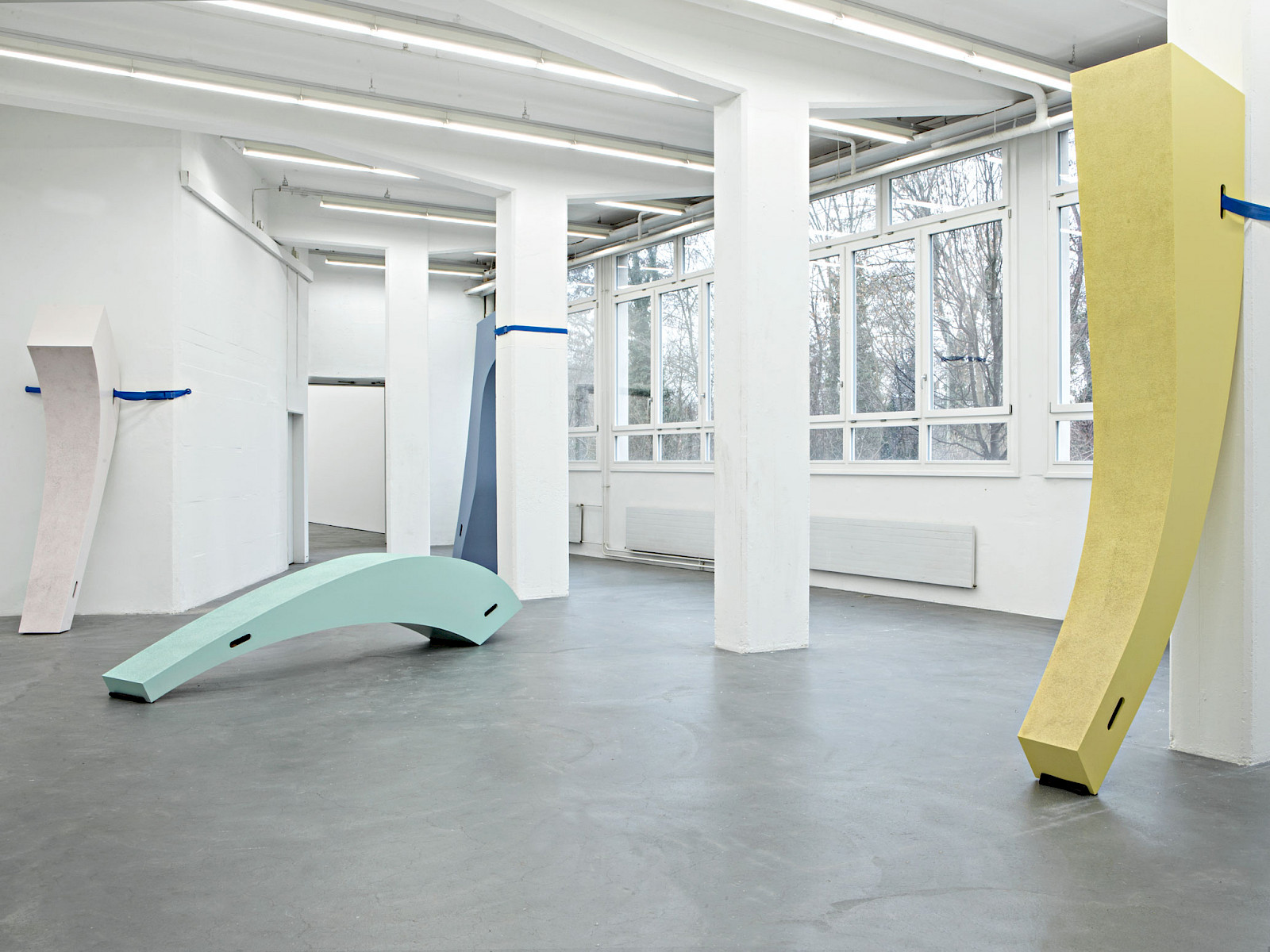
Installation view "Traceur / Traceuse" curated by Ines Goldbach at Kunsthaus Baselland, Muttenz / Basel, 2014
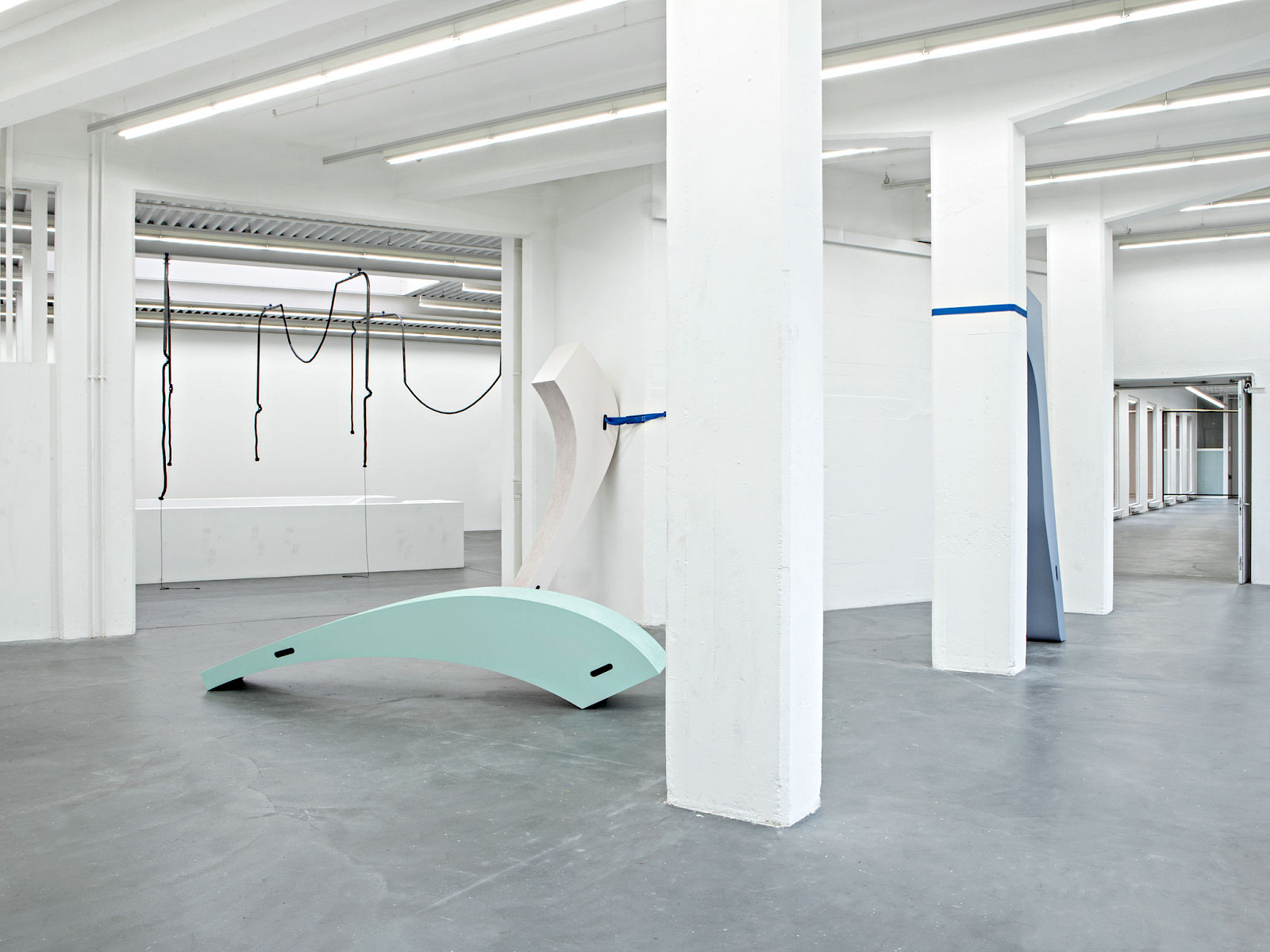
Installation view "Traceur / Traceuse" curated by Ines Goldbach at Kunsthaus Baselland, Muttenz / Basel, 2014
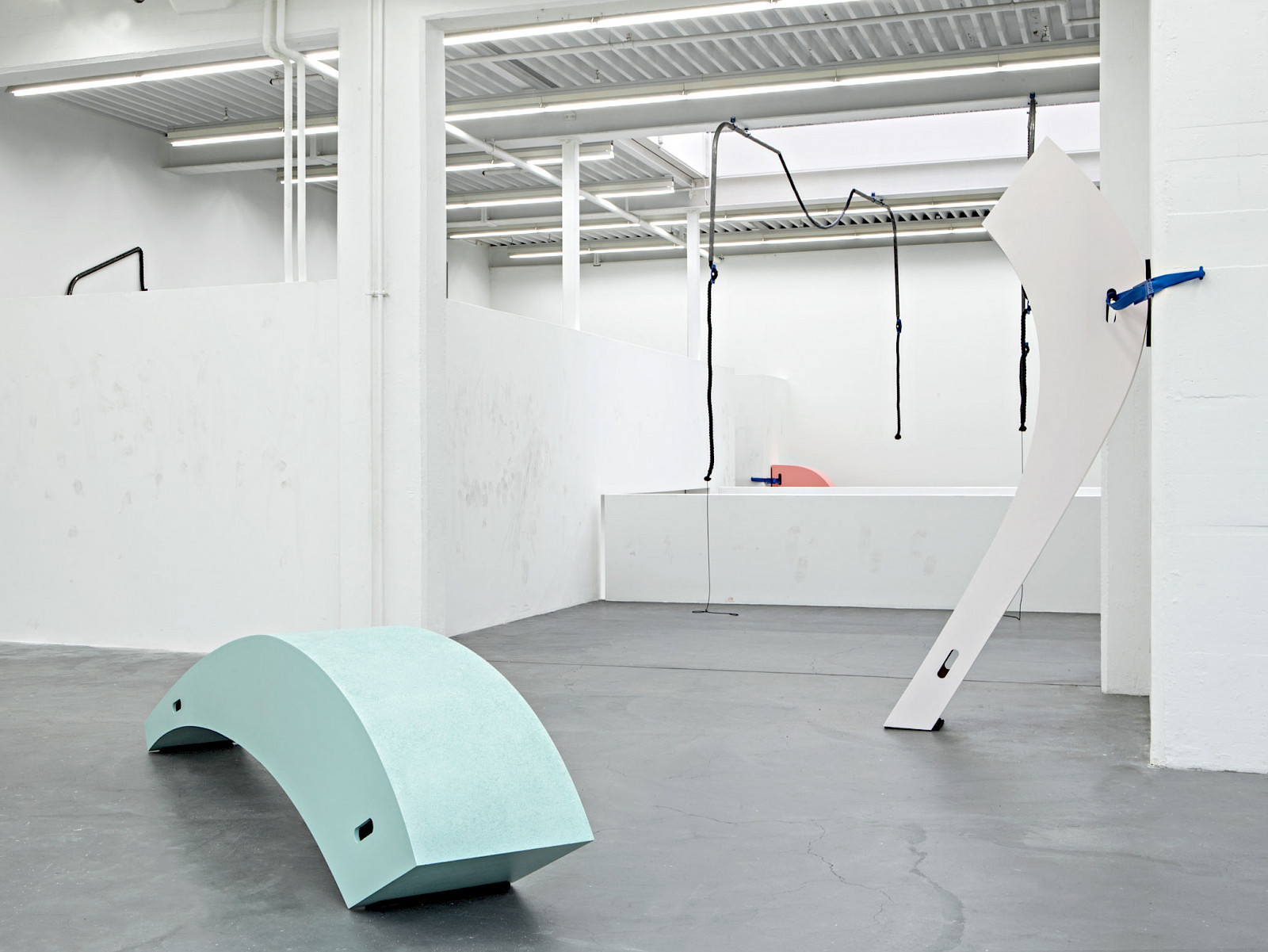
Installation view "Traceur / Traceuse" curated by Ines Goldbach at Kunsthaus Baselland, Muttenz / Basel, 2014
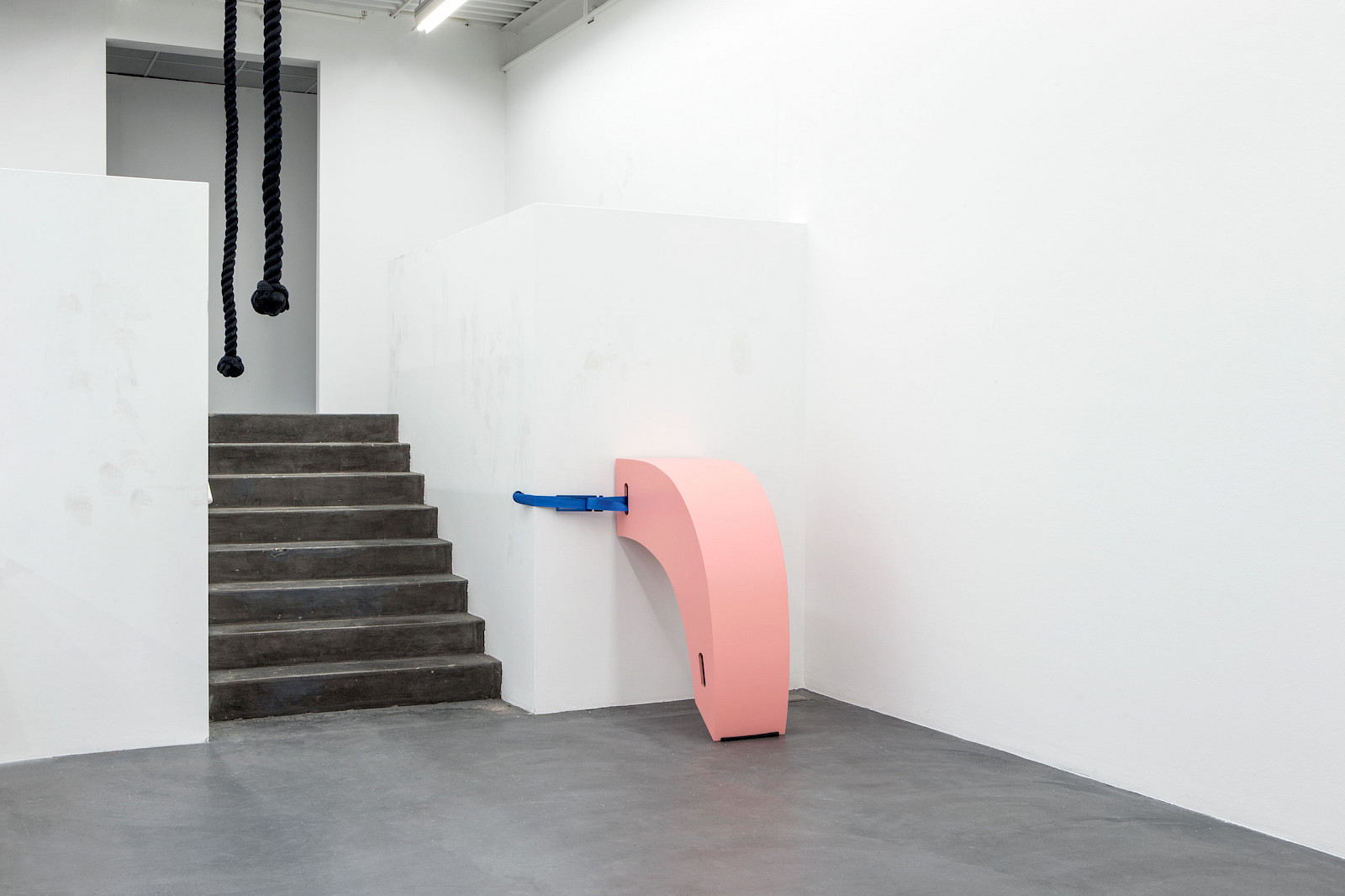
Obstacle double step, 2014
Painted plywood, foam, polypropylene, varnished annealed cast iron, powder coated metal
45 x 125 x 80 cm
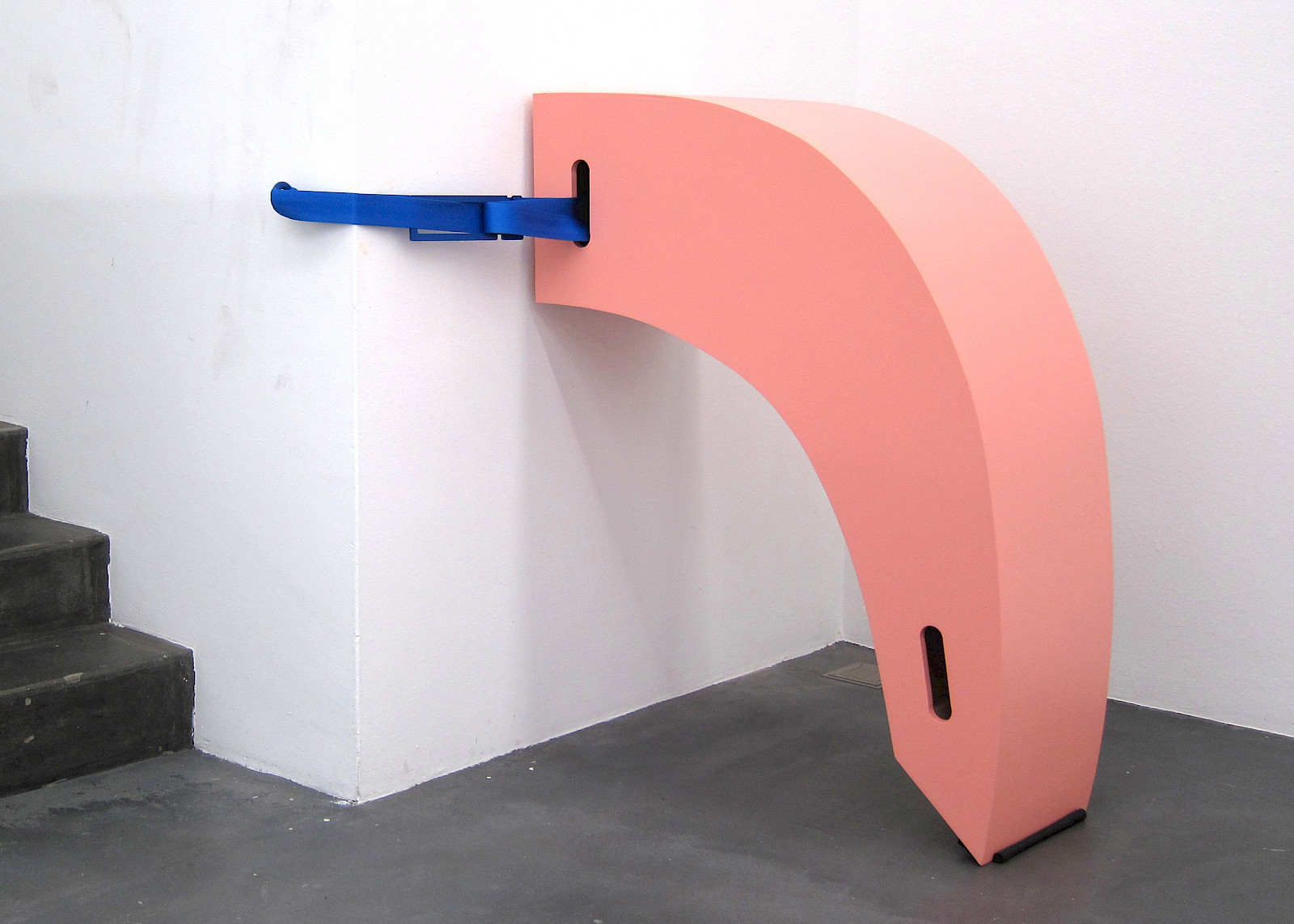
Obstacle double step, 2014
Painted plywood, foam, polypropylene, varnished annealed cast iron
45 x 125 x 80 cm

Obstacle 2014: beached whale (front), mimetc pillar (back)
Painted and quartz sanded plywood, foam, polypropylene, varnished annealed cast iron, powder coated metal
50 x 100 x 300 cm
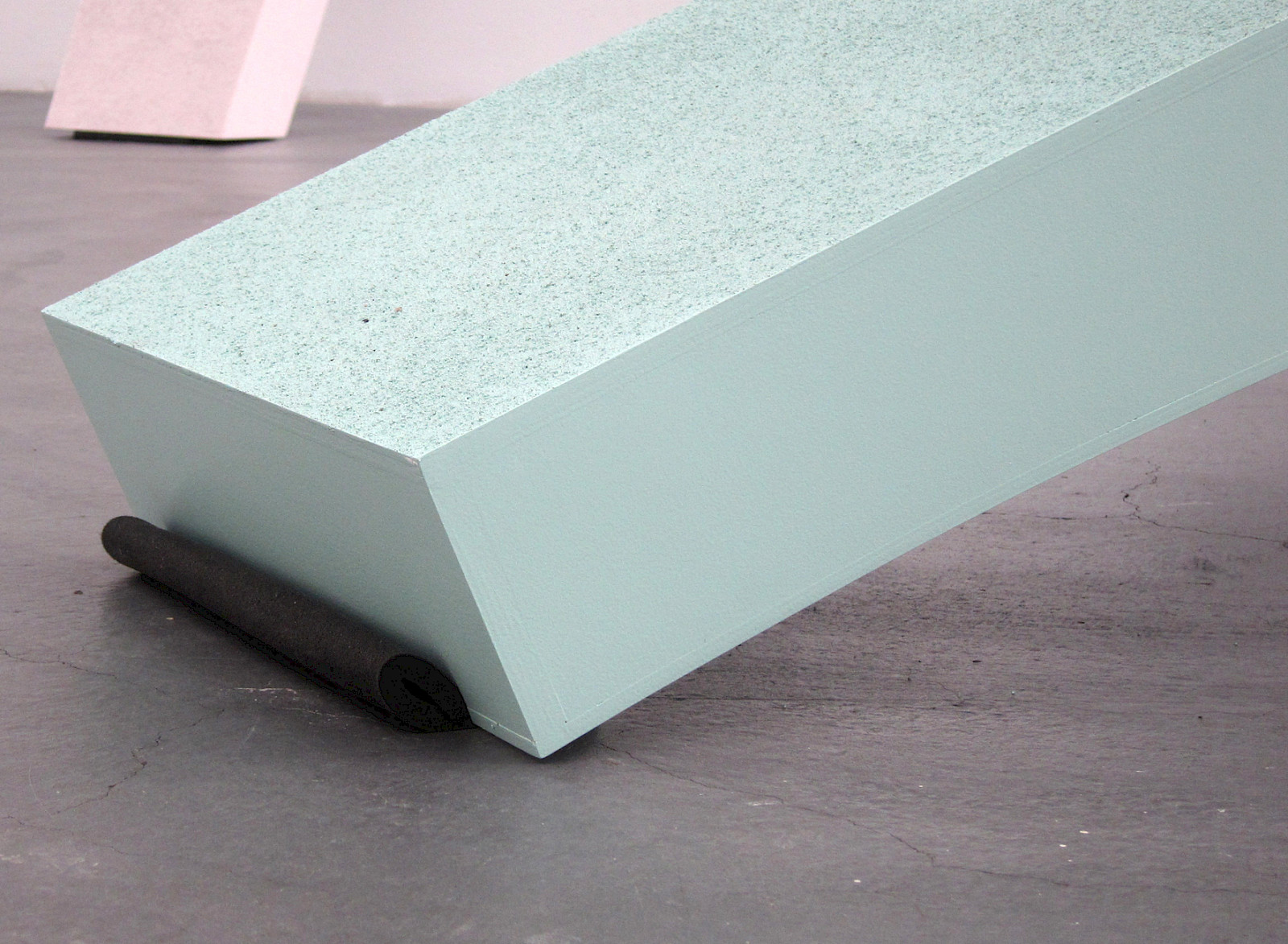
Obstacle 2014, beached whale (Detail)
Painted and quartz sanded plywood, foam, polypropylene, varnished annealed cast iron, powder coated metal

Obstacle (resting mauve), 2014
Painted and quartz sanded plywood, foam, polypropylene, varnished annealed cast iron, powder coated metal
50 x 100 x 300 cm
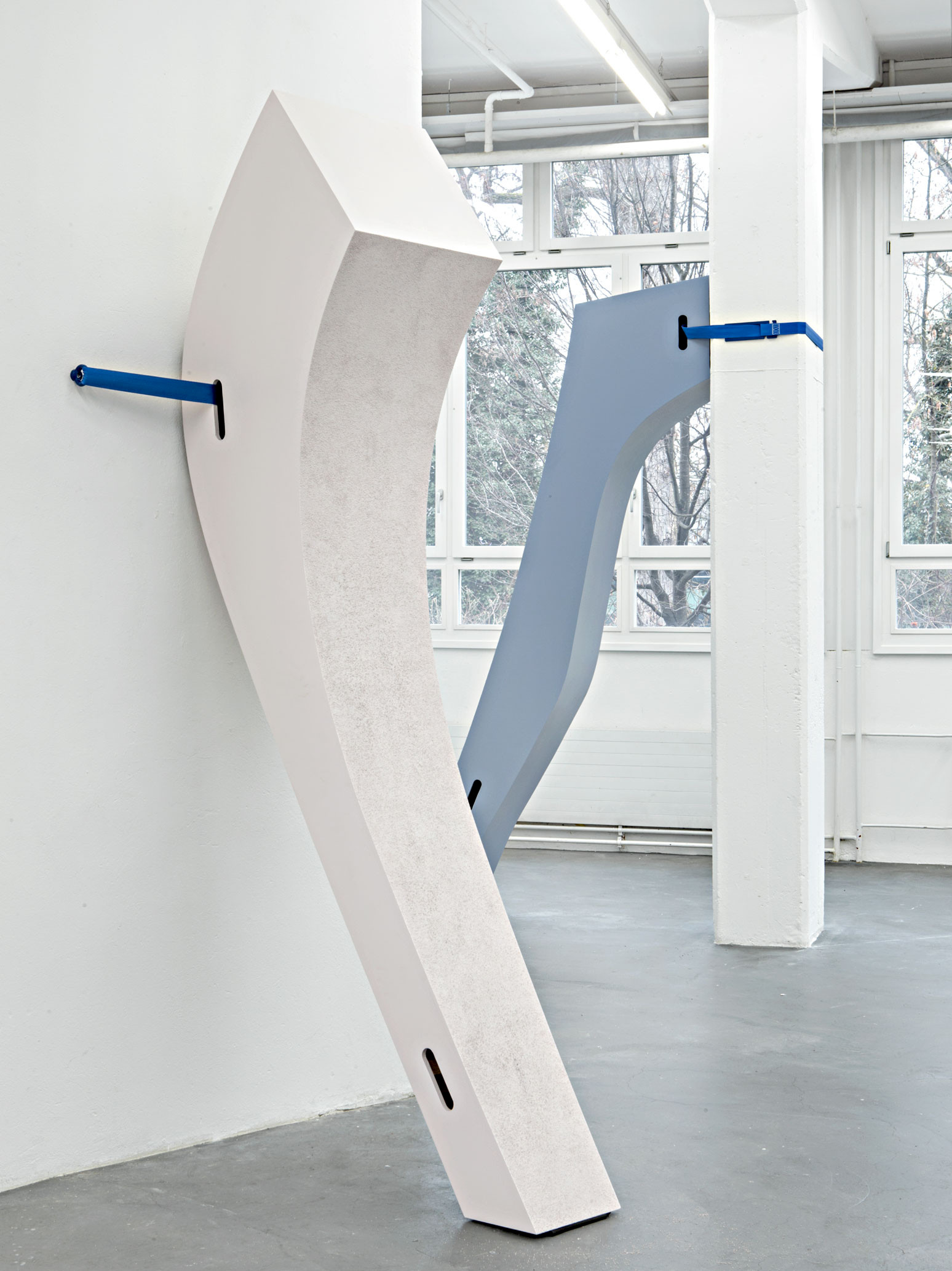
Obstacle, 2014: flabby rose (front), resting mauve (back)
Painted and quartz sanded plywood, foam, polypropylene, varnished annealed cast iron, powder coated metal
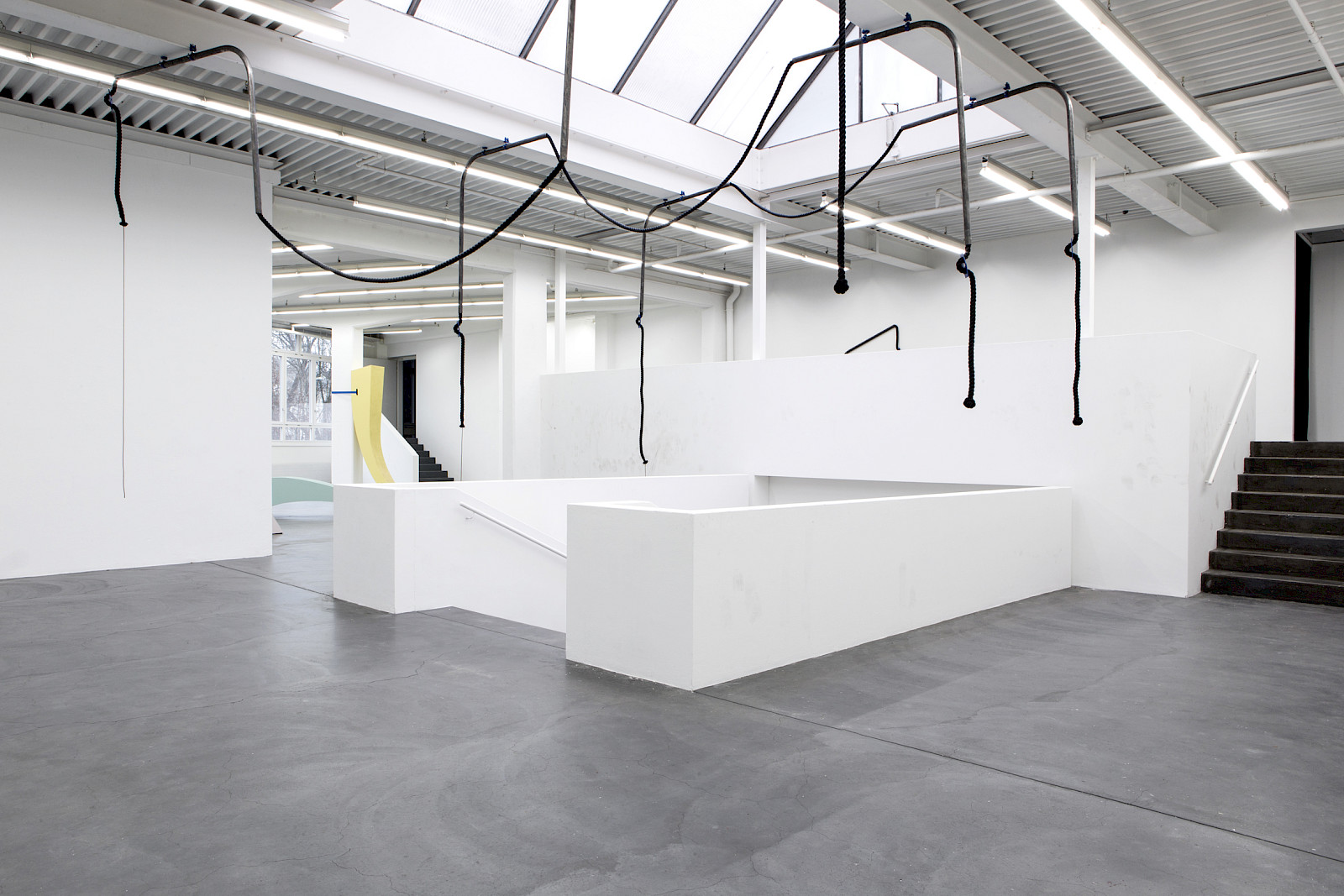
Installation view "Traceur / Traceuse" curated by Ines Goldbach at Kunsthaus Baselland, Muttenz / Basel, 2014
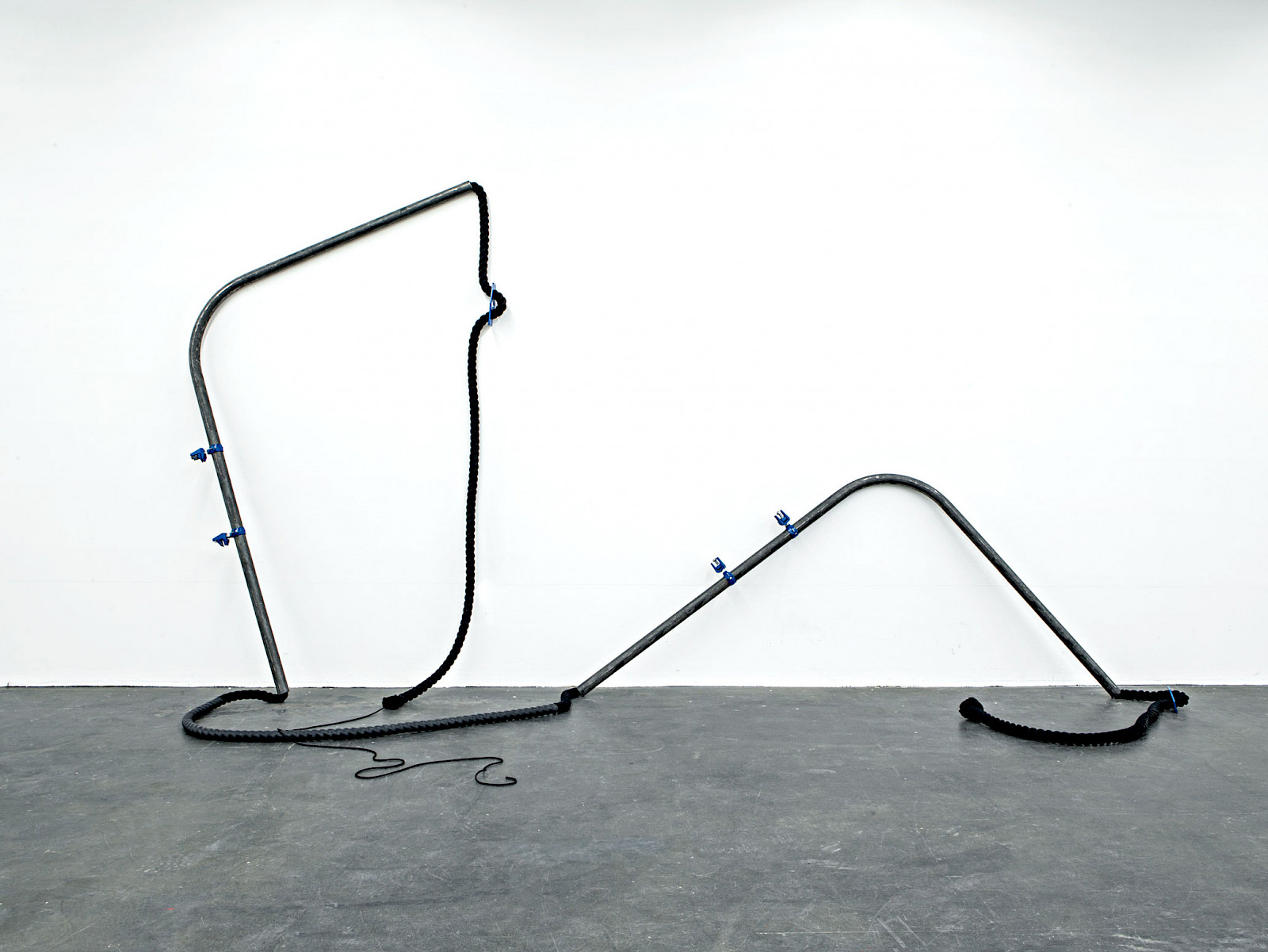
Lacher 4, 2014
Metal bar, cotton rope, shrinkable tubing, varnished annealed cast iron, powder coated metal
approx. 200 x 100 x 370 cm
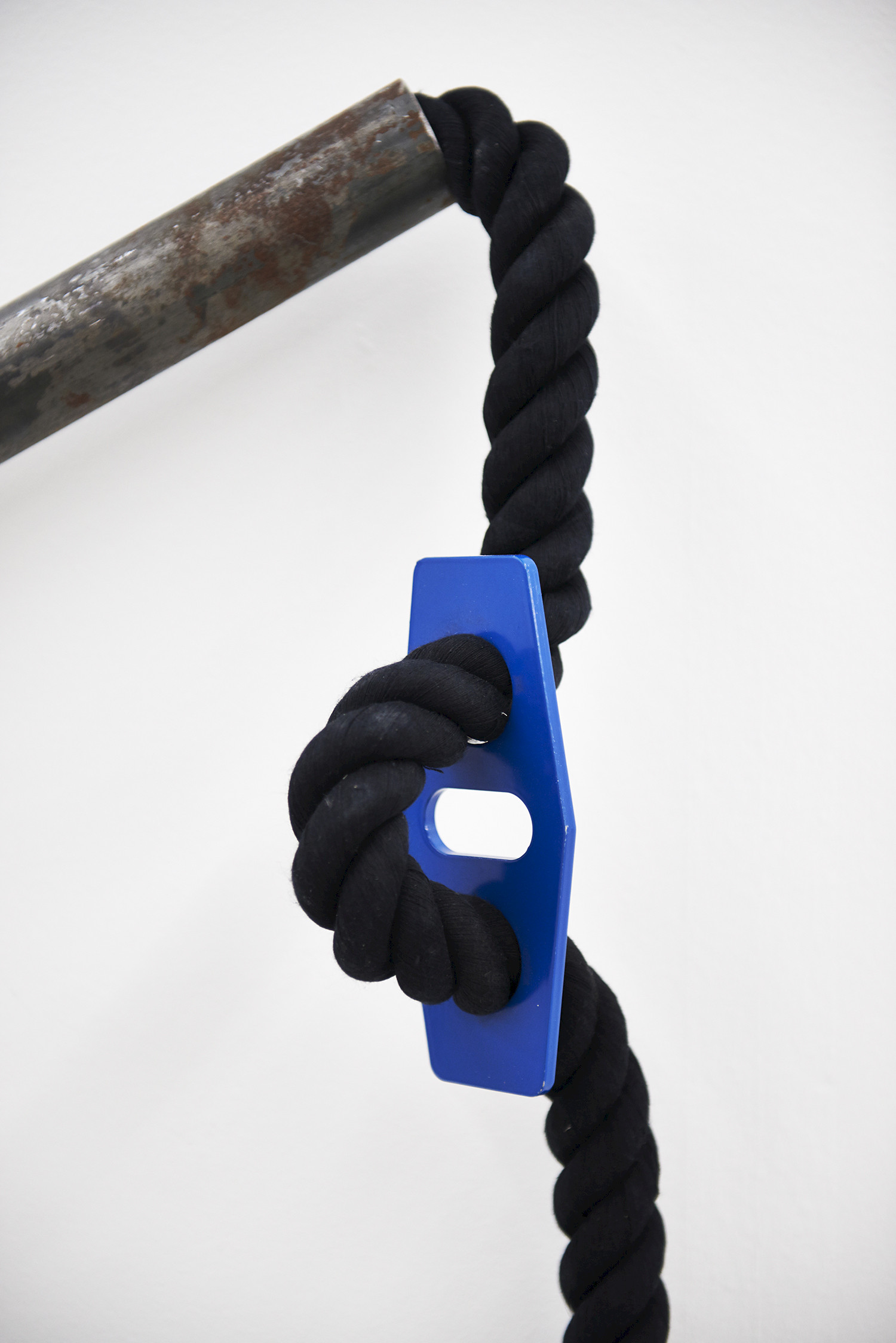
Lacher 4, 2014 (Detail)
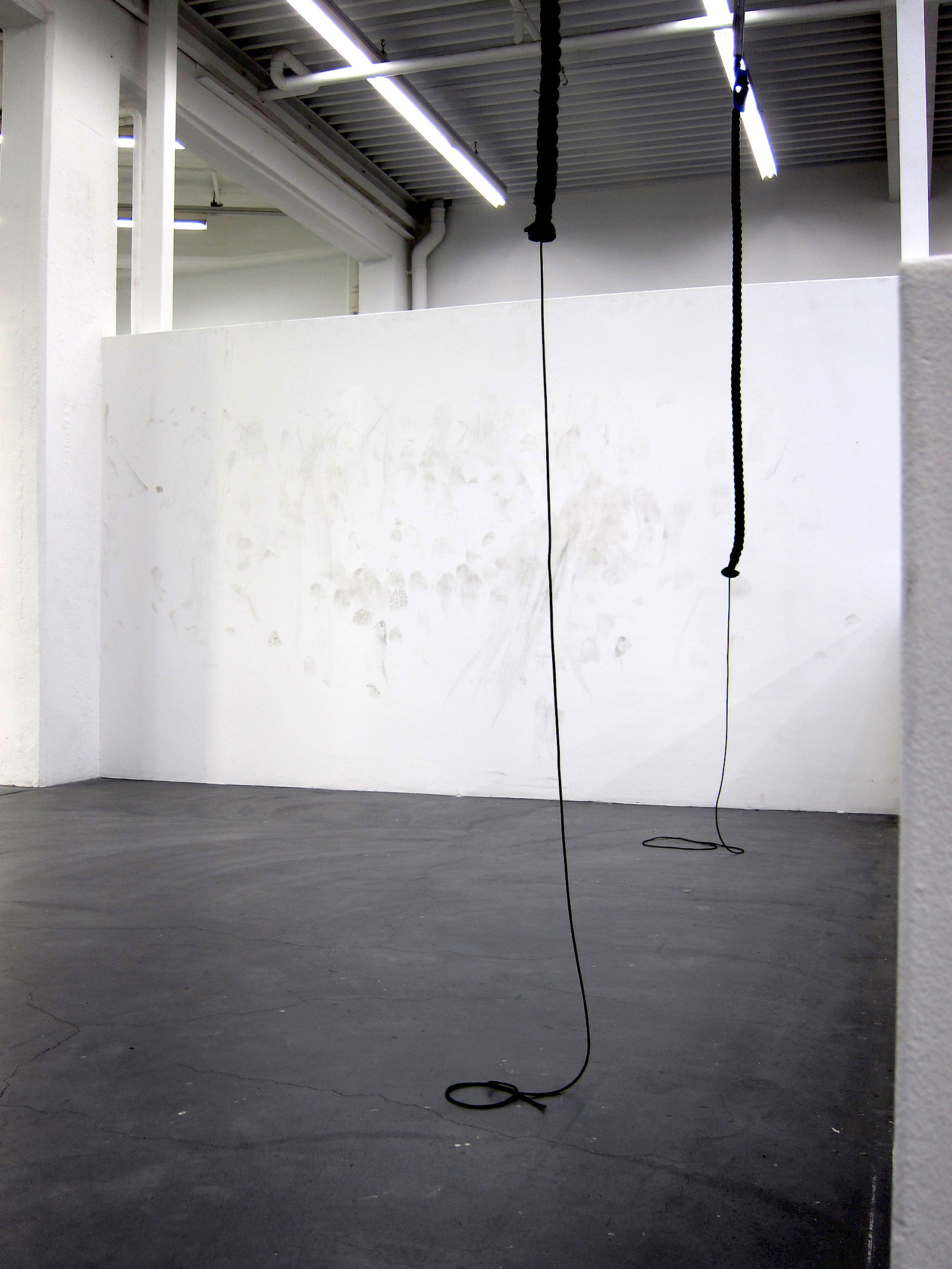
A-Z, 2014
Wall traces of the invited professional Traceurs, who activated the work and the location with jumps shortly before the opening of the exhibition.
Spuren von engagierten prof. Traceuren und Traceusen, die im Vorfeld die Installation /Parcour aktivierten.
With the sculptures and sculptural interventions thus placed, Hueber formulates and emphasises the particular architecture of the ground floor of the Kunsthaus – whether floor, wall, ceiling or passage. Here no room is enclosed, there are hardly any right-angled corners, yet nonetheless the spaces are not reminiscent of a classical White Cube. The ground floor is a passageway, a space of movement. During almost every exhibition visitors walk through the spaces of the ground floor several times, in order – like a kind of distributor - to access the neighbouring spaces from there. The artist has adopted an extreme fashion of this form of movement in space, which the visitor completes, for her so-called ‘parcours’ run, and she actively includes the idea in her work for the Kunsthaus.
So the starting point for her work here is a clear engagement with the parcours that has developed into a form of sport. The question of how one can take over the given, found space is central for this sport, which challenges, possibilities and limits to one’s own movement are manifest in the space. The choice of the perfect angle for jumps, its bounce as well as various descriptions of jumps were decisive for the conception of the parcours considered in advance. A parcour traceur or traceuse – as is the title of the work – borrows something, helps themselves to their urban surroundings, moves creatively and relates to previous movements. Here he or she is comparable to the artist and an artist’s actions. The artist too helps himself or herself to the space in order to create something of their own, something new. For the traceur the right action at the right moment is the focus, movement in an interstitial space, in places that escape public attention.
With her sculptures and installations Karin Hueber has created a kind of stage for a performance by professional parcours runners, a performance that has in fact taken place, but which is not visible to the public because it took place during the development of the work in the Kunsthaus. The action is not the central part of the work. Instead in the foreground are the development of the course with the traceur team previously mentioned, the influence of Huebers ability to jump on the placement and appearance of the works and – and this above all – the traces that the actual run, through and over the works, left behind. Thus Karin Hueber also speaks about ‘activated sculptures’ that have both actual and possible traceur movements in their memory. In contrast to these are the ‘not activated sculptures’ that can in the future be installed in other places and incorporated in the process of activation.
(Ines Goldbach)